DiDi Autonomous Driving Debuts Mass-Production-Ready L4 Robotaxi Model, Unveils Latest Updates in Partnership with GAC Aion
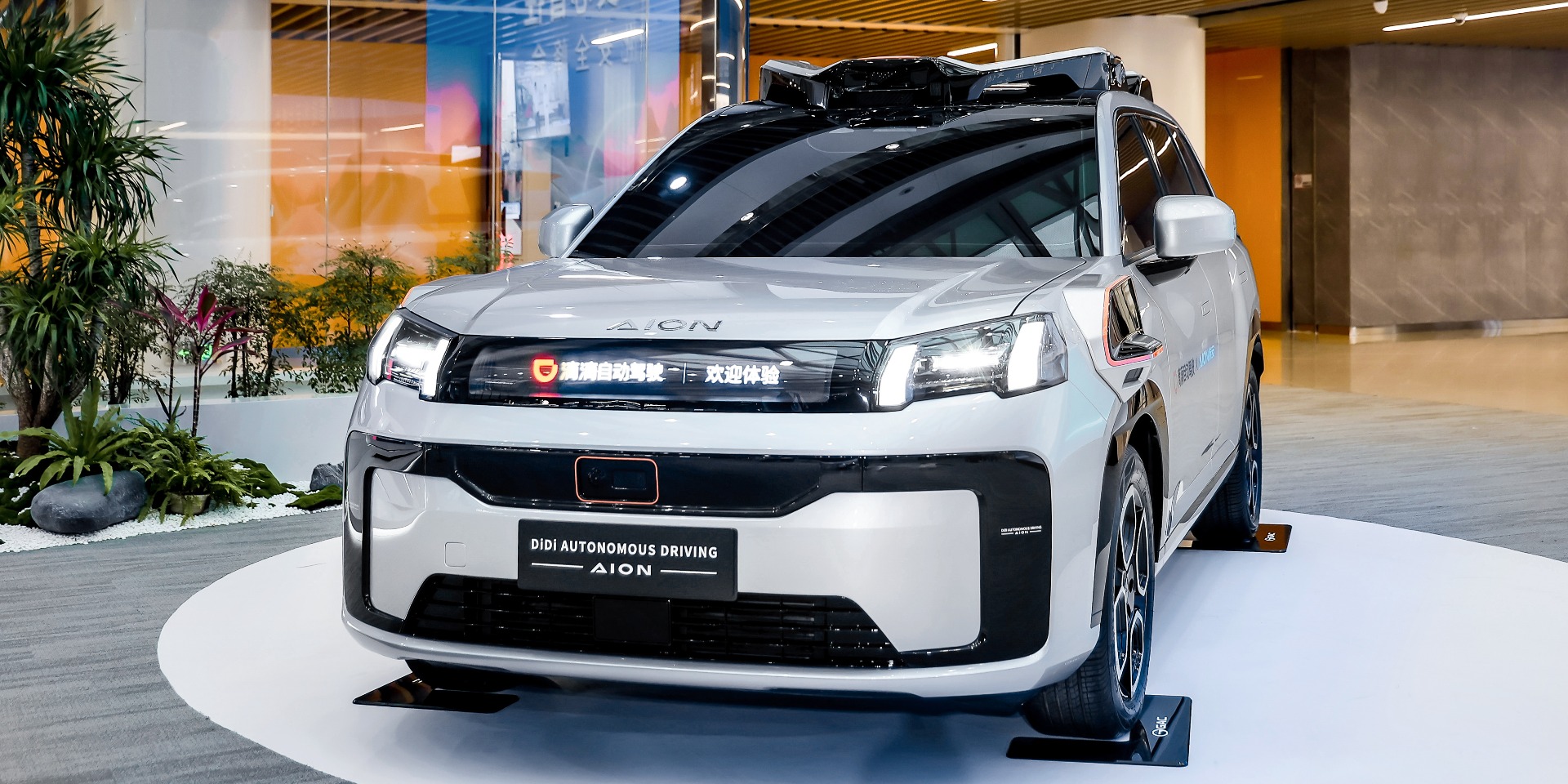
At the 2025 GAC Tech Day and GAC Intelligent Safety Summit held in Guangzhou, DiDi Autonomous Driving, a key strategic partner of GAC, officially unveiled its next-generation mass-production-ready L4 hardware platform. The event also marked the debut of the first L4 Robotaxi, jointly developed with GAC Aion.
Zhang Bo, Co-founder of DiDi and CEO of DiDi Autonomous Driving, shared the company’s latest insights and practices in L4 autonomous driving at the event. The newly unveiled L4 model integrates DiDi’s advanced hardware platform and multidimensional safety redundancy system with GAC Aion’s globally adaptive, L4-ready vehicle platform. The model is scheduled for mass production and delivery by the end of 2025.
Next-Generation Autonomous Driving Hardware Platform
Since the joint launch of the “AIDI Plan” in May 2023, DiDi Autonomous Driving and GAC Aion have closely collaborated to integrate their respective innovations into the upcoming mass-production L4 model.
According to Zhang Bo, the vehicle is equipped with DiDi’s latest-generation autonomous driving hardware platform, featuring 33 sensors in total. The platform includes a combination of lidar, cameras, 4D millimeter-wave radar, infrared cameras, and acoustic sensors, enabling 360-degree full-scenario perception. Leveraging next-gen radar chips, the new 4D radar achieves four times the performance of its predecessor, especially in challenging weather conditions such as rain, snow, or fog. Infrared cameras enhance pedestrian detection under low-light conditions. Notably, DiDi is the first in the industry to mass-produce and integrate solid-state blind spot lidars into the vehicle.
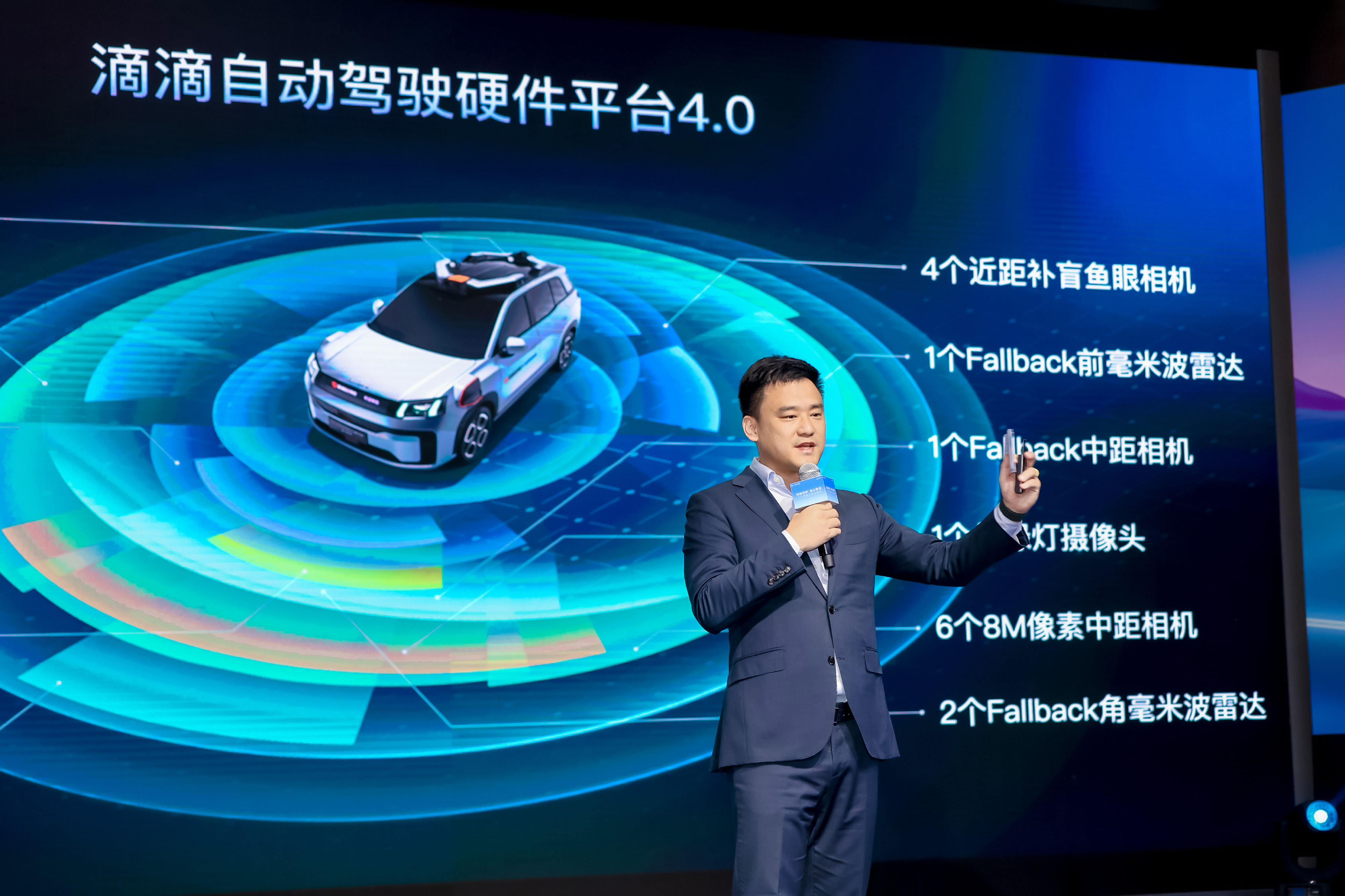
The L4 model also features “Orca” — DiDi’s self-developed, high-performance central computing platform. It is the first of its kind in the industry to be ready for mass production, effectively integrating three domains: autonomous driving, in-cabin intelligence, and communication/navigation. With over 2000 TOPS of GPU computing power and a 48-core CPU, the platform doubles the sensor access capability of the previous generation. It also achieves an 88% increase in trunk volume availability, a 74% reduction in cost, and a sevenfold improvement in assembly efficiency.
Debut of the Mass-Production-Ready L4 Model
The exterior sensor layout of the new L4 model was unveiled for the first time during the event. The vehicle features a top-mounted disc-shaped lidar, radar on the front fenders, and a surround camera setup, providing comprehensive 360° perception capabilities. Additionally, the headlight assembly integrates seamlessly with an intelligent interaction screen. The screen can display welcome messages, emojis, vehicle status updates, and more, enhancing both the vehicle’s interactivity and visual distinctiveness.
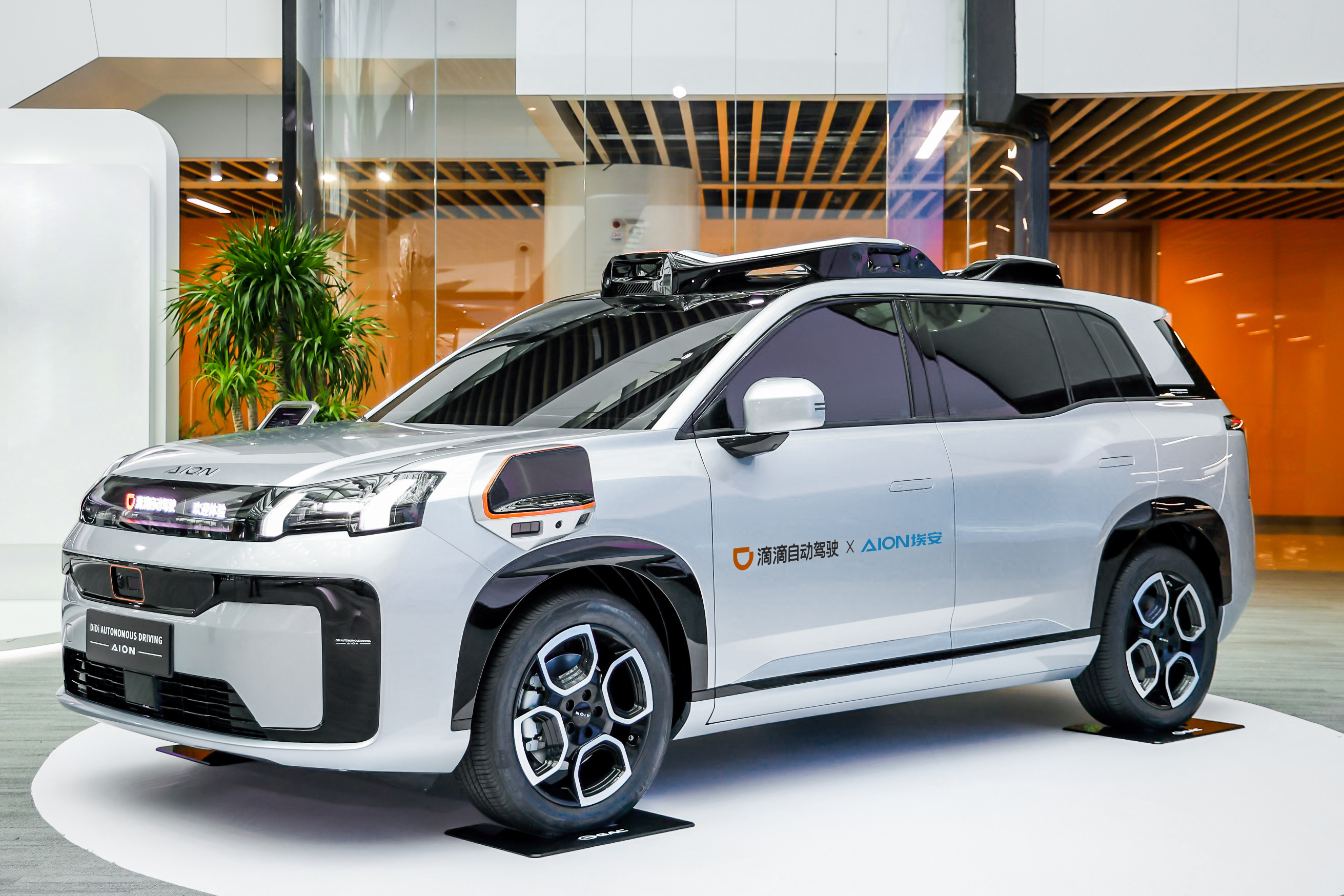
The vehicle’s autonomous system is built with a multi-layer safety redundancy architecture, incorporating algorithm-level redundancy, software redundancy, and hardware fallback mechanisms. An independent collision risk detection module is deployed in the algorithm layer. The software layer includes multi-scenario MRC (Minimal Risk Condition) strategies to handle faults through L1 fallback. Hardware redundancy is achieved via an L2 fallback system, enabling safe roadside pull-over or in-lane stops if a system failure occurs. The development process adheres to the highest standards of functional safety and safety-of-the-intended-functionality (SOTIF).
Built on GAC Aion’s EV-native platform and global L4-ready redundant safety architecture, the vehicle is equipped with GAC Aion’s “Magazine Battery” and has achieved five-star safety standards in both China and Europe. It features multiple redundancies in its braking, steering, communication, and power systems.
Open Innovation Through Deep Partnerships
With nine years of full-stack experience in L4 autonomous driving technologies, DiDi Autonomous Driving continues to lead in innovation. The company was the first to introduce a hybrid dispatch model that integrates Robotaxi services into the DiDi App. By leveraging its autonomous technology and Huiju Port intelligent operations platform, DiDi has been operating in hybrid dispatch mode across Beijing, Guangzhou, and Shanghai for over 1,700 consecutive days without any safety incidents.
“L4 autonomous driving is expected to be one of the most important technological shifts in the next decade of the AI era,” said Zhang Bo. “Its sustainable development relies on the deep integration of AI, manufacturing, and operations. Our partnership with GAC Aion marks a new phase of commercialization for autonomous driving, accelerating the validation of both technology and the market.”
DiDi Autonomous Driving remains committed to responsible technological innovation. The company continues to increase investment in R&D, foster open innovation with industry partners, and advance the practical application of autonomous driving, delivering greater value for users and the transportation industry.